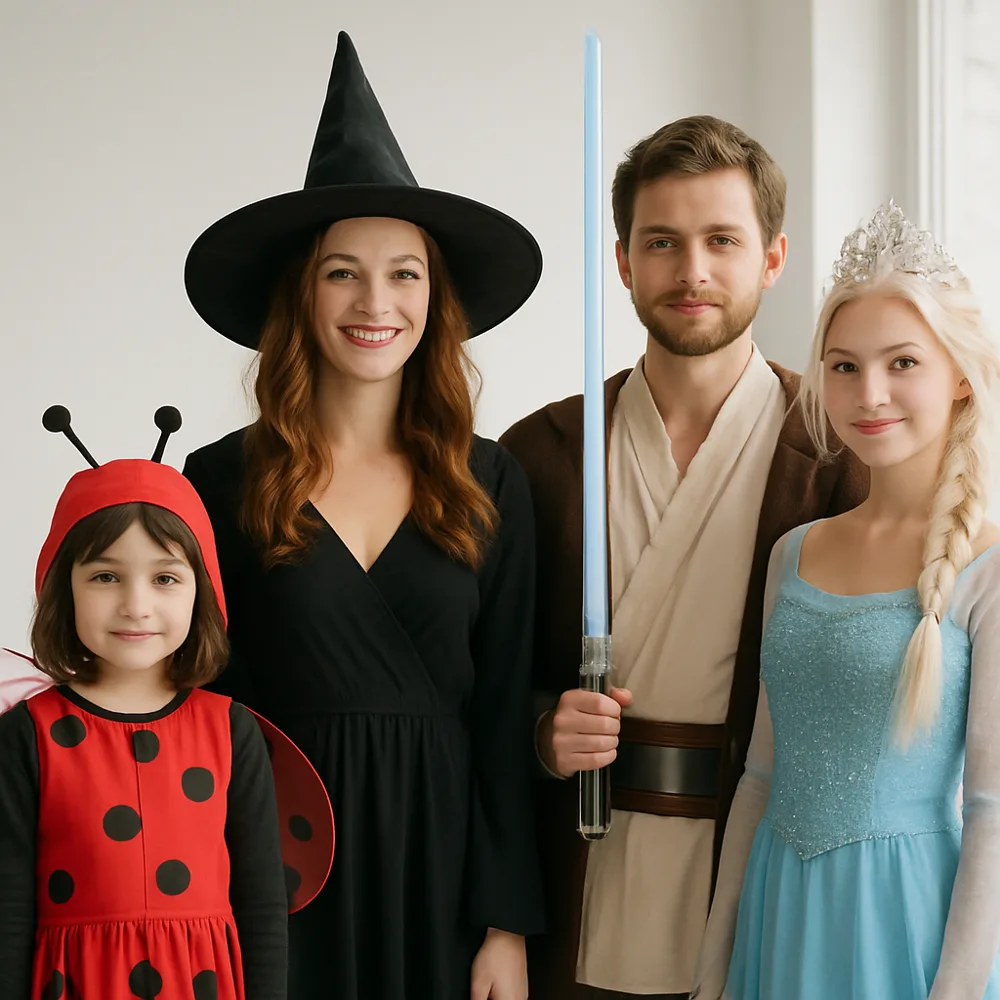
A strong group costume has one clear connection, such as a shared color palette, setting, or collection of character roles. It does not require everyone to wear the same outfit. Start by asking each person what kinds of clothing and accessories they are comfortable wearing, then agree on a theme that leaves room for variation. A group of storybook travelers, for example, can share a palette while each person chooses a different role.
Make a simple visual guide showing the agreed colors, a few optional accessories, and any practical requirements. Decide early whether people will make, adapt, or source their own pieces. Keep the plan flexible for different budgets, schedules, and mobility needs. Shared details like a badge, ribbon, or patch can connect the group without requiring everyone to purchase or construct a complete matching costume.
Schedule a brief group check-in before the event to compare outfits and solve any conflicts. Make sure each person can move comfortably, see clearly, and manage their own costume parts. If the group will be outdoors, plan for weather layers and visible meeting points. Take photos together, but do not make participation depend on matching perfectly. The best group costume feels unified in a picture while still letting every person look like themselves.