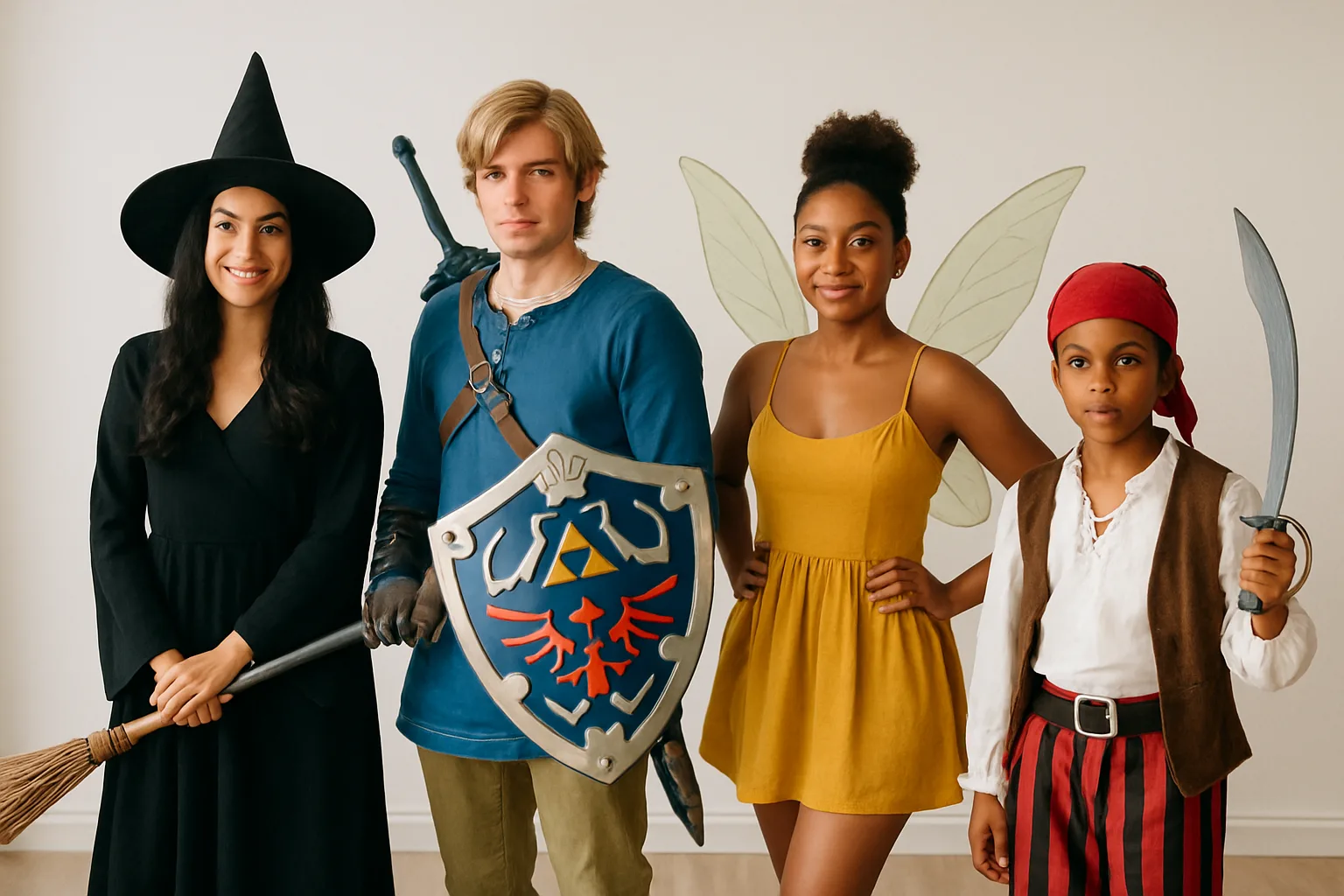
Start by choosing a character, occupation, or mood that can be suggested with clothes you already own. Look for a strong starting piece, such as a bright jacket, a striped shirt, or a long skirt. Write down the colors and shapes that make the idea recognizable, then check your closet before buying anything. A simple visual reference can help you stay focused without requiring an exact copy.
Build the outfit in layers. Combine the main garment with one supporting item, such as a scarf, belt, vest, or hat. Small accessories often communicate a theme more clearly than adding several unrelated pieces. If the colors do not match perfectly, use a consistent accent color to make the outfit feel intentional. Try the full combination on and move around before deciding it is finished.
Comfort and practicality belong in the plan from the beginning. Choose shoes you can wear for the event, keep pockets or a small bag available, and avoid accessories that obstruct your view. Take a quick photo in ordinary lighting to see whether the idea reads from a distance. Afterward, return reusable garments to regular rotation and store special additions together for another dress-up day.
Turning Everyday Pieces into Recognizable Characters
Once you have a basic outfit, the real work is making it read as a specific idea rather than just a nice set of clothes. The trick is to focus on silhouette, colour blocking and one signature detail. Most well-known characters and roles are identified by just two or three of these cues, so you rarely need more than that.
Think in silhouettes first
Stand back and ask what shape the costume makes. A long coat belted at the waist suggests a detective or a traveller. Wide trousers with a fitted top can point to a sailor or a 1970s look. A cardigan over a collared shirt reads as a librarian or a scholar. If the shape is right, people will often recognise the idea before they notice any details.
Use colour to do the explaining
Colour carries a lot of meaning. All black with a single red accent feels dramatic or villainous. Earthy browns and greens suggest an adventurer or a woodland figure. Primary colours worn together look playful and cartoon-like. If your closet doesn't have the exact shade, pick the closest family of colours and keep it consistent from head to toe.
Choose one signature detail
This is the piece that confirms what you are. A few closet-friendly examples:
- A tie worn loosely and glasses for a busy reporter
- Suspenders and a flat cap for a newsboy or vintage worker
- A bandana and rolled sleeves for a mechanic or painter
- A headband and leg warmers for an aerobics-era look
If you can't find the detail at home, it is usually the one item worth making or borrowing rather than buying a full outfit.
Adapt for the season
Closet costumes are easy to adjust for weather. In warm months, swap heavy layers for linen or cotton and let accessories carry the theme; our guide to lightweight costume layers for summer has more ideas. For cold nights, choose characters who naturally wear coats, scarves and boots, as covered in cozy Halloween costumes.
If this approach sparks a bigger project, closet staples also make a solid base for a first cosplay. Start with what you own, then add one handmade element at a time, as explained in the beginner guide to your first cosplay.
Also on this site: Full archive
Also on this site: Crooked Fingers Play Moroccan Lounge on March 5 Behind Comeback Album Swet Deth